
A Beginner’s Guide to a Low-Maintenance Garden
A beautiful garden does not have to mean hours of work every weekend. With a little planning and the right plants, you can enjoy a green, welcoming garden that mostly looks after itself. Here is how to start.
Start small and plan first
Begin with one bed or a corner of the garden rather than the whole plot. Watch where the sun falls during the day: most vegetables and flowers need at least six hours of sun, while shady spots suit ferns and hostas. Draw a simple sketch of your space and note the sunny and shady areas — it will save you from planting the wrong thing in the wrong place.
Feed the soil
Healthy soil is the secret to a low-maintenance garden. Dig in plenty of compost or well-rotted manure before planting, and your plants will grow stronger roots and need less watering and feeding. If your soil is heavy clay, compost helps it drain; if it is sandy, compost helps it hold moisture. A bag or two each spring is usually enough for a small garden.
Choose easy plants
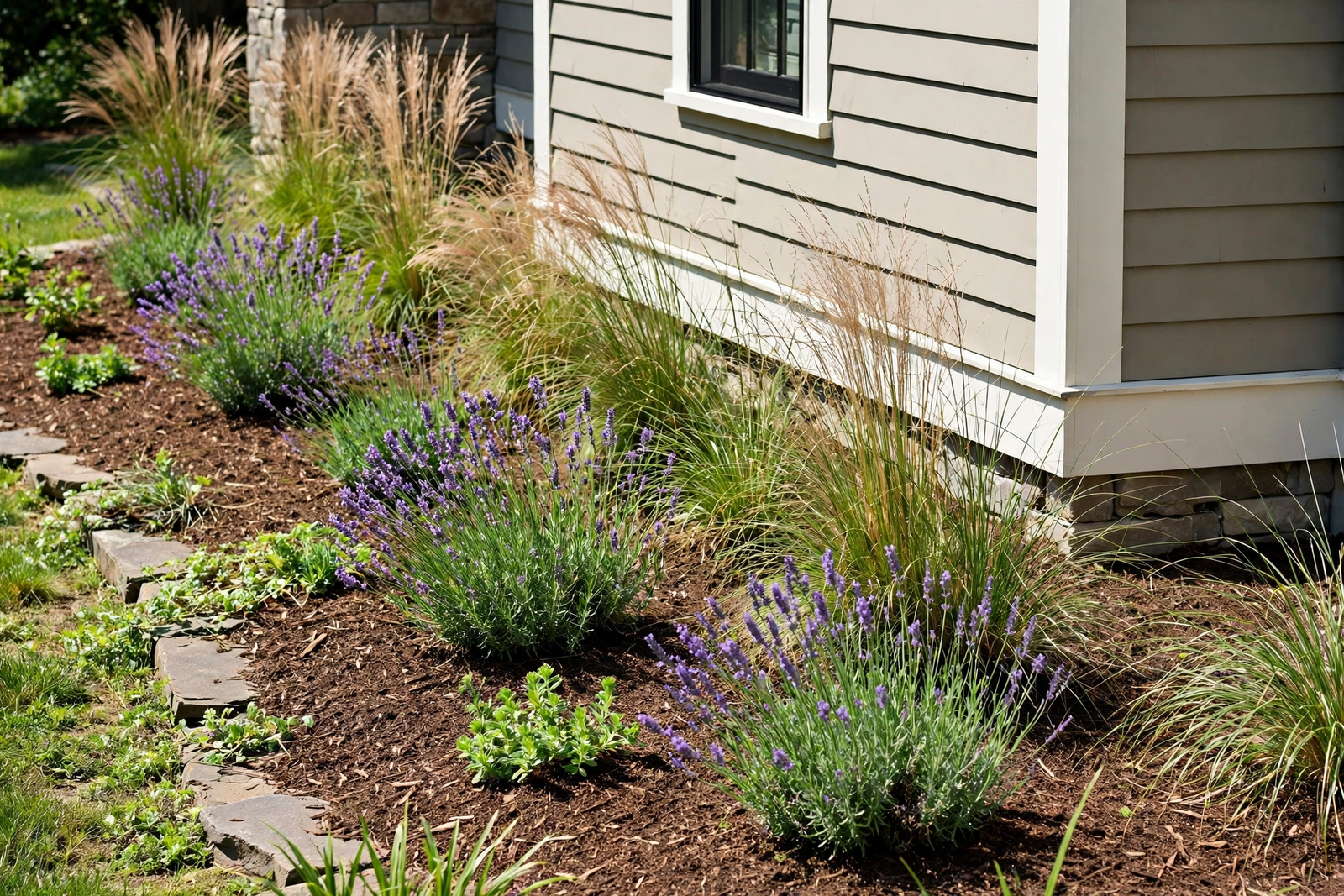
Pick plants that suit your climate and soil, and they will thrive with little help. Hardy perennials such as lavender, daylilies, hostas and ornamental grasses come back year after year. Native plants are a good choice too, because they are already adapted to local weather and need less water. Avoid fussy plants that need constant feeding, spraying or winter protection until you feel more confident.
Mulch to beat weeds and save water
A thick layer of mulch — bark, straw or compost — spread over the soil keeps moisture in and weeds down. It also feeds the soil as it breaks down. Mulch in spring after the soil has warmed up, and keep it a few centimetres away from plant stems so they do not rot. You will water less and weed far less often.
Water deeply, not often
Watering little and often encourages shallow roots. Instead, water deeply once or twice a week so moisture reaches the roots. Water early in the morning or in the evening to lose less to evaporation, and aim at the base of the plant rather than the leaves. A simple drip hose or soaker hose can do this for you while you get on with other things.
A low-maintenance garden is not a no-work garden, but a little planning in the beginning means less work for years to come. Start small, feed your soil, choose the right plants, and enjoy your garden instead of battling it.